
Arizona
Van life Field sitesTours Gov’t & Public Policy
Spend 7 days in Arizona exploring how drought, development, and culture intersect — from the Grand Canyon to Phoenix’s canals — while learning about water security in the American West.
7 days travel at
$1,750 plus tuition
INSS 3970
3 Credit Hours
Instructed by
Dr. Leslie Guelcher
Priority Deadline
September 30, 2026
Travel Overview
Go beyond textbooks and lecture halls. Study USA’s travel courses combine academic learning with hands-on, real world experiences. Every class maximizes its unique location with immersive activities.
You’ll earn academic credit, apply what you’re learning directly to your surroundings, and engage in lively class experiences—all guided by Ole Miss faculty.
What You'll Learn
- How water security shapes life in the American West, from desert survival to urban growth.
- The role of the Colorado River in supporting cities, farms, and indigenous nations, and why it’s so contested.
- How to analyze competing perspectives—government, tribal, agricultural, and environmental—on scarce resources.
- How law, policy, and engineering interact in managing water under conditions of drought and climate change.
- How to synthesize field experiences into professional policy products like briefing memos and group presentations.
What You'll Do
- Walk Phoenix’s historic canal system and learn how it supplies water to a booming desert city.
- Visit the Salt River Project (SRP) and the Arizona Department of Water Resources to see how water is managed and allocated.
- Meet with leaders from the Tohono O’odham Nation and the Gila River Indian Community to hear firsthand about sovereignty and water rights.
- Explore desert ecosystems at the Arizona-Sonora Desert Museum and discover how plants and animals adapt to scarce water.
- Walk on the rim of the Grand Canyon at Grand Canyon National Park during a ranger-led talk on geology, ecology, and hydrology.
- Hike the red rock trails of Red Rock State Park in Sedona while reflecting on tourism, ecology, and water flows.
- Participate in a policy workshop where you’ll create a professional briefing memo and present solutions for water security challenges.
- Keep a field journal that documents your reflections with notes, sketches, and photos from each site visit.
All activities are tentative and subject to change depending on scheduling, booking availability, and course adjustments.
Meet Your Instructor
All Study USA courses are designed and led by Ole Miss faculty. Your instructor(s) will be your first point of contact during your travels and lead you through all the class experiences.
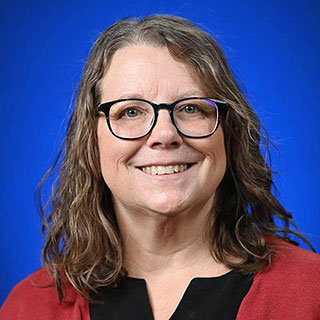
Leslie Guelcher
Instructional Associate Professor of Center for Intel and Security Studies
laguelch@olemiss.edu
Dr. Leslie Guelcher is a professor at the University of Mississippi, specializing in national security, resource competition, and environmental security. She teaches courses that explore how issues such as water, climate, and geography intersect with security and policy, using structured analytic techniques to connect theory to practice.
She enjoys this field because it highlights the real-world stakes of security studies: how access to resources like water can shape the lives of communities, the strategies of governments, and the future of entire regions.
Her personal interests include hiking, traveling, and exploring the landscapes throughout the United States. These connect directly to the Arizona course, which immerses students in the deserts, cities, and tribal nations shaped by the Colorado River.
This is her first time teaching with Study USA, and she is excited to help students bridge classroom learning with field experiences that bring water security challenges to life.
“I’m excited to teach this course because water security is one of the defining challenges of our time. Arizona offers a living classroom where students can see firsthand how drought, population growth, agriculture, and indigenous sovereignty intersect around the Colorado River. It’s an opportunity to take learning out of the classroom and into the landscapes and communities where these issues matter most.”
– Dr. Guelcher